
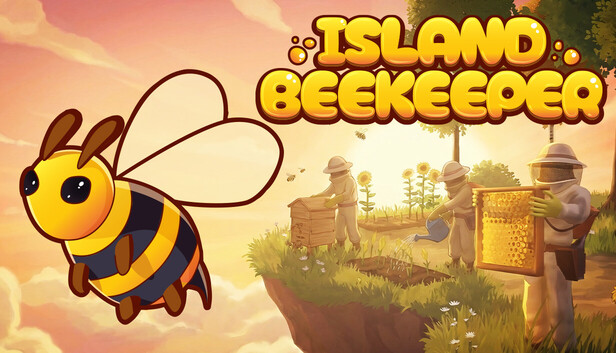
Earth is dying. Disease, famine, and ruin have wiped out most of what kept people alive down there, and the last real lifeline comes from honey harvested on floating islands somewhere above the clouds. You’re the latest beekeeper sent up to fix that. Every beekeeper before you vanished without a trace, and the further you push into this sky world, the more you start piecing together what actually happened to them. This guide covers the full arc: setting up your first hive, keeping yourself alive long enough to use it, and building a supply chain that actually saves people on the ground.
Game Overview
Island Beekeeper skips the combat and the apocalypse-survival grind you’d expect from the premise. Instead you’re managing a quiet, cloud-top apiary: catching bees, growing crops, and shipping honey back to Earth by drone.
There’s still a survival layer underneath the cozy tone. Health, hunger, and thirst all tick down, and ignoring them will slow your progress fast. The real hook is the delivery loop — every jar of honey and every batch of seeds you send down moves the story forward and raises your standing as a beekeeper.
Survival Basics for New Players
Before you touch a single hive, get your stats under control. Health drops if you let hunger or thirst run out, and there’s no fast-travel fix for that once it happens.
- Health: restored by eating honey directly or sleeping in a bed (full restore, night only)
- Hunger: restored by eating food — strawberries and other gathered crops work early on
- Thirst: quenched only by purified water, made in a kitchen or furnace
Sleep is oddly restrictive: you can only do it at night, so plan your builds and gathering runs around a day/night cycle instead of treating rest as available on demand. Get a bed up early. It’s one of the highest-value builds in your first hour.
Core Mechanics
Resource gathering on the starting island covers wood, stone, flax, strawberries, white flowers, iron ore, sand, and coal. All of it feeds into a workbench, which is where you craft your pickaxe, axe, hammer, hoe, and watering can.
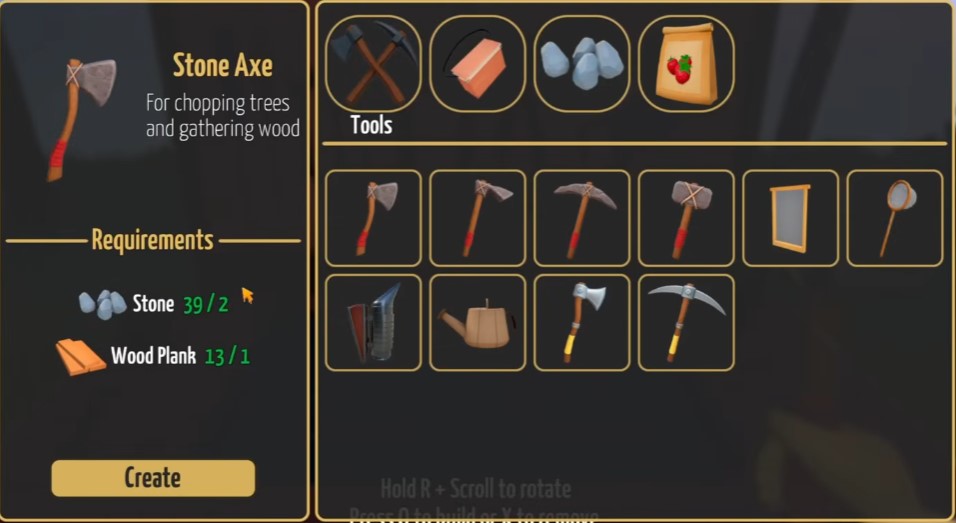
Building runs through the hammer. Hold Q to open placement mode for foundations, walls, roofs, windows, and interior fittings like beds and workbenches. Hold R to rotate whatever you’re placing — small detail, but it matters once you’re trying to fit a hive against a wall or line up a doorway.
Once your base is functional, a Meadow Cycle Station opens travel to other sky islands. Farest Island, for example, holds a forest bee queen, raspberry seeds, mushrooms, and coal — resources you won’t find at home.
Beekeeping Guide
This is the actual game loop, and it’s more hands-on than the marketing screenshots suggest.
Catching queens: track down a wild hive, break it open, then net the queen bee with your bug net. Bees do sting during this, so don’t go in with your health already low.
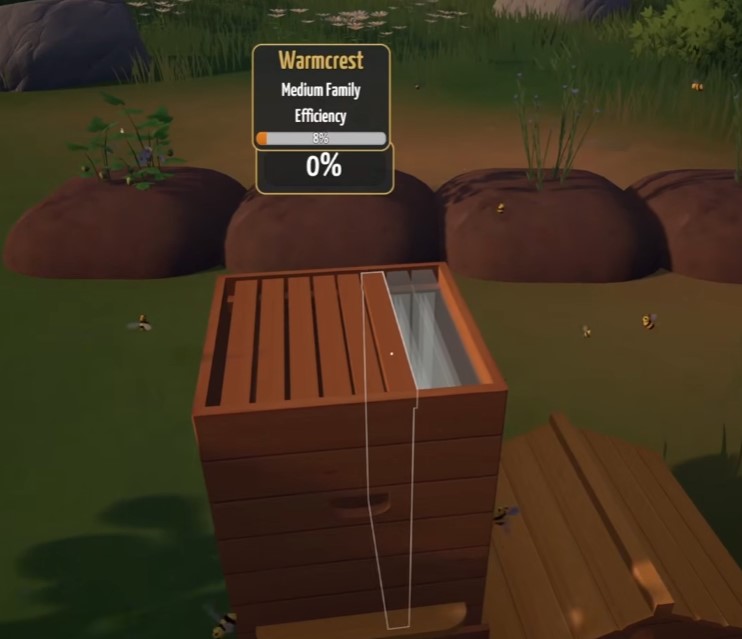
Setting up a hive: craft empty frames at the workbench, slot them into a hive, then drop the queen inside. From there it’s a waiting game — bees need time to collect nectar from flowers nearby before frames fill up.
Producing honey: pull the full frames out and place them into a honey extractor. Hold an empty jar and turn the handle to collect the honey. It’s a manual step every time, so budget the time if you’re running multiple hives.
Boosting efficiency: hives work faster with flowers growing close by. Plant flax, strawberries, raspberries, or pumpkins and keep them watered with a watering can — an unwatered garden is a slow garden, and slow gardens mean slow honey.
Reducing stings: craft a smoker early. It calms bees during frame removal and cuts down on how often you get stung mid-harvest.
Progression & Orders
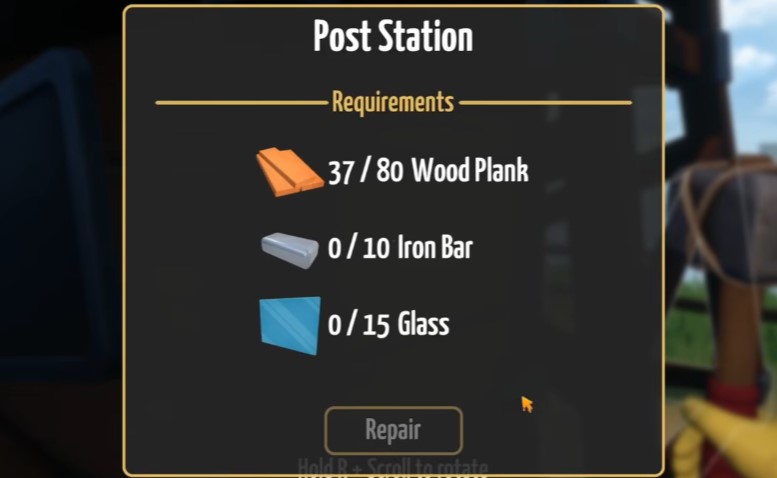
Once you’ve got honey coming in, build a post station. That’s your link to Earth — load honey into the drone, send it off, and a specialist inspects the cargo before confirming delivery.
Orders are what actually move your reputation forward. Typical requests include:
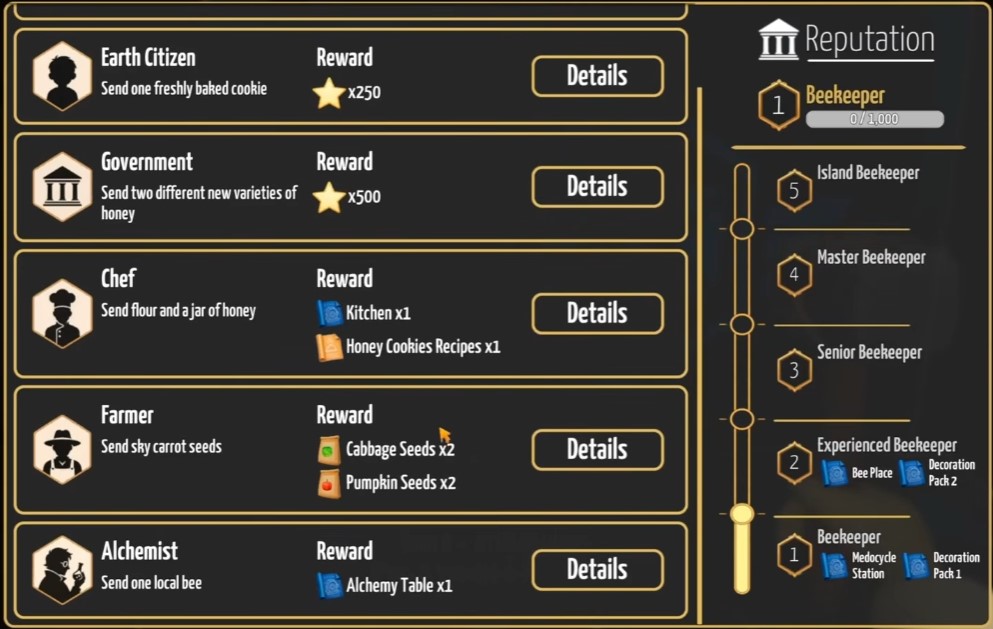
| Order Type | Example |
|---|---|
| Classic honey | Send 3 jars |
| Sky flower seeds | Send seeds from 3 different flowers |
| Baked goods | Send 1 freshly baked cookie |
| New honey varieties | Send 2 different types |
| Specialty seeds | Send sky carrot seeds |
| Local wildlife | Send 1 local bee |
Complete enough of these and your status climbs from beginner beekeeper toward master. There’s no shortcut here — it’s steady delivery volume plus variety that pushes reputation up.
Island Exploration & Resource Distribution
The game isn’t fully released yet, so not every island is mapped out in detail. What’s confirmed from official gameplay material is that each island brings its own biome, its own plant life, and its own bee species.
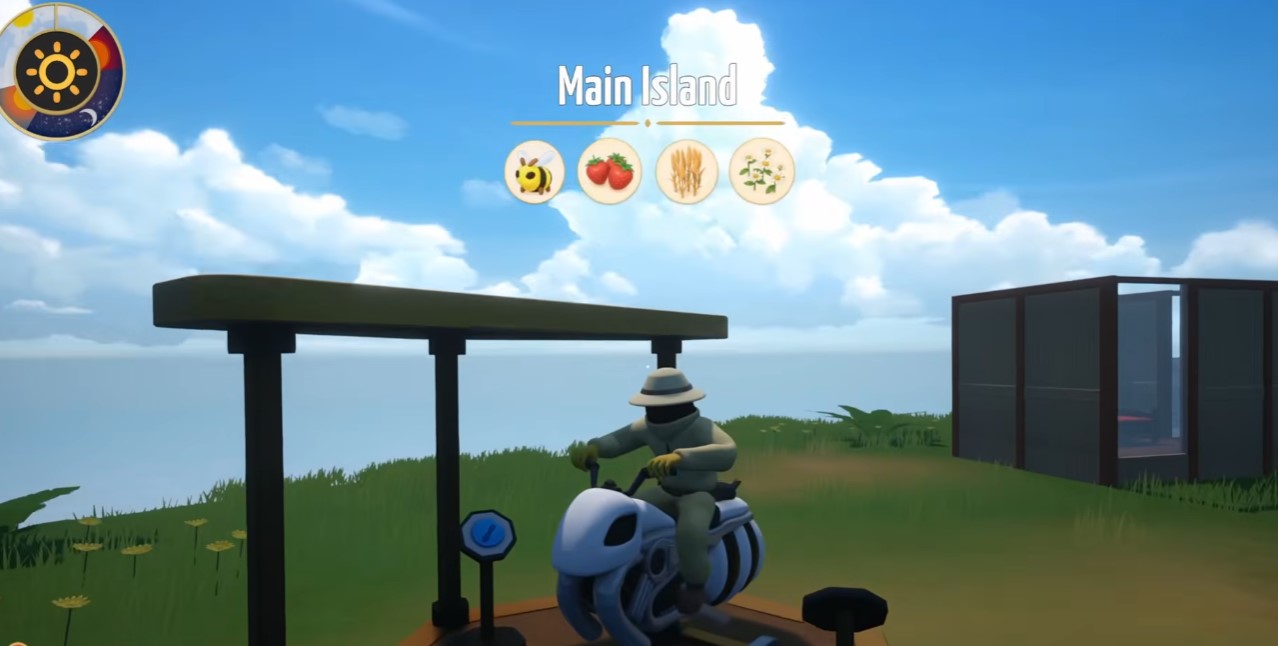
Every new landmass is worth the trip for at least one thing — a rare bee you can’t get elsewhere, a material your current setup is missing, or a crop that unlocks a new honey variety. On top of the resource hunt, exploring islands surfaces traces left behind by the beekeepers who came before you, which is where the game’s actual mystery starts to unfold.
Tips & Observations
A few things that aren’t obvious until you’ve already made the mistake:
- Wood doesn’t regrow on the starting island, as far as anyone’s found. Stockpile more than you think you need before you start major construction.
- Water access matters for more than drinking — crops need it too, so build near a water source or plan regular trips to haul it back.
- No craftable lights exist early on. Glass windows are your best bet for keeping interiors lit during the day.
- Bee volume is adjustable in the audio settings, which is worth knowing once you’ve got a dozen hives buzzing at once.
- Journal (J key) tracks your active quests and tips — check it if you lose track of what an order actually needs.
- Hammer menu (H key) opens building options separately from the standard workbench crafting screen.
- Inventory shortcuts: shift-click and right-click both handle item transfers, which saves a lot of manual dragging once your storage fills up.
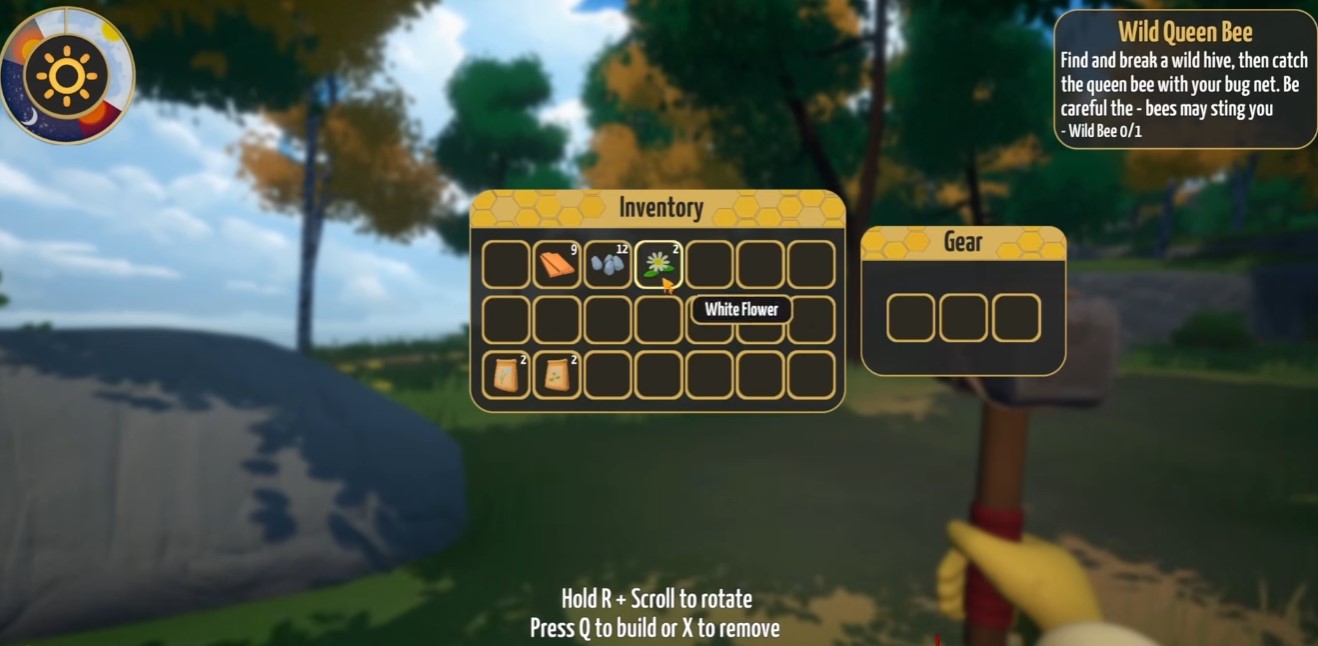
None of these are game-breaking if you miss them, but they’ll save you a wasted evening or two. Island Beekeeper rewards patience and a bit of planning far more than fast reflexes — treat your first island as the training ground it is, and the rest of the sky opens up a lot faster than it looks at the start.